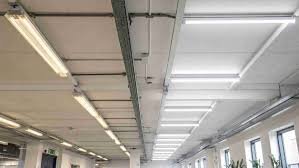
The phase-out of many fluorescent lamps has changed maintenance for British businesses. Restrictions introduced under updated hazardous-substances rules removed common T5 and T8 fluorescent lamps from general placement on the market, although existing stock and installed lamps did not suddenly become illegal to use. The practical effect is gradual: familiar replacements become harder to source, prices can change and repeated spot repairs make less sense.
Facilities teams now have a choice between waiting for failures and planning a wider LED conversion. A planned approach can reduce disruption and give the business time to survey circuits, light levels and controls. It can also prevent hurried purchases of mismatched tubes or retrofit products whose compatibility has not been checked.
An LED upgrade should not copy every old fitting automatically
Traditional fluorescent layouts were designed around the output and distribution of the lamps available at the time. LED products can deliver light differently, so a one-for-one replacement may provide too much, too little or uneven coverage. Ceiling height, spacing, racking and room reflectance should be considered before quantities are fixed.
Modern Batten lights are available in several lengths, outputs and configurations, including products with emergency or sensor functions. LightHub Direct supplies fittings for settings such as workshops, garages, warehouses and utility areas. Buyers should compare lumens, efficacy, beam distribution, colour properties, enclosure rating and control options rather than treating all battens of the same length as equivalent.
Maintenance history can identify the best starting point
Call-out records show which areas consume the most time and replacement stock. A corridor with frequent control-gear faults may justify early attention even if its annual operating hours are modest. A warehouse row that runs throughout the working week could offer a larger energy reduction. Ranking areas by failure rate, operating hours and operational importance creates a defensible programme.
The survey should also identify fittings that contain emergency batteries. These cannot be removed or altered without considering the emergency-lighting design. Asset labels and test records help the project team distinguish standard, sensor and emergency variants before ordering begins.
Controls can change the business case
LED efficacy receives much of the attention, but running hours often determine the actual saving. Stockrooms, corridors and low-traffic warehouse aisles may remain illuminated because conventional switching groups them with busy areas. Occupancy controls can reduce those hours if detection coverage and time delays suit the activity.
Daylight near rooflights or perimeter windows can also reduce the need for full output during part of the day. Control proposals should be tested against working practice, because poorly commissioned sensors can create dark patches or distract staff. Metered or estimated consumption before and after the project gives the business a clearer view of results.
Retrofit tubes and new fittings require different assessments
An LED tube may appear to offer a quick route because the existing housing remains in place. Compatibility, wiring arrangement, lampholders, control gear and product instructions must be assessed carefully. Modifying a fitting can affect responsibility for its safety and performance, and not every old housing is worth retaining.
A complete LED batten provides a purpose-designed optical and electrical system, but it involves replacement labour and waste from the removed fitting. The best answer depends on condition, access, expected life and project scale. A competent electrician should inspect the installation and follow the manufacturer’s requirements.
Waste handling belongs in the project plan
Fluorescent lamps contain hazardous material and should enter an appropriate recycling route rather than general waste. Contractors and clients need to agree who will remove, store and document the old lamps and fittings. Large projects can generate significant volumes, so containers and collections should be arranged before work begins.
LED products will also reach end of life eventually. Choosing durable equipment with clear warranty terms and available information can support longer replacement cycles. Circular-economy discussions are encouraging buyers to ask about maintainability and component availability rather than judging a product only at the day of purchase.
Planned conversion reduces operational surprises
A pilot area can reveal installation time, light appearance and staff response before a whole-site programme begins. Lux measurements and visual checks should be taken under representative conditions. In warehouses, that means assessing the working plane and vertical faces of stored goods, not only the empty floor directly beneath a fitting.
Procurement teams should compare whole-life implications as well as the quoted fitting price. Installation access, expected operating hours, cleaning frequency and the cost of interrupting production can materially affect the result. Warranty conditions should be read before an order is placed, including any requirements concerning registration, operating temperature or approved controls. Keeping invoices and product schedules together will make a future claim or matching replacement easier to manage.
The fluorescent phase-out is no longer a distant policy story. It is visible in storerooms, supplier catalogues and maintenance budgets. Businesses that map their existing estate can move from reactive replacement to a phased lighting plan, using each upgrade to improve coverage and control rather than simply recreating an ageing scheme with a different light source.
About the Author